
What Relationship Ruptures Really Mean (and How to Heal Them)
Clinical review written by Andrea Shindle, MA, LPC, NCC | May 2026
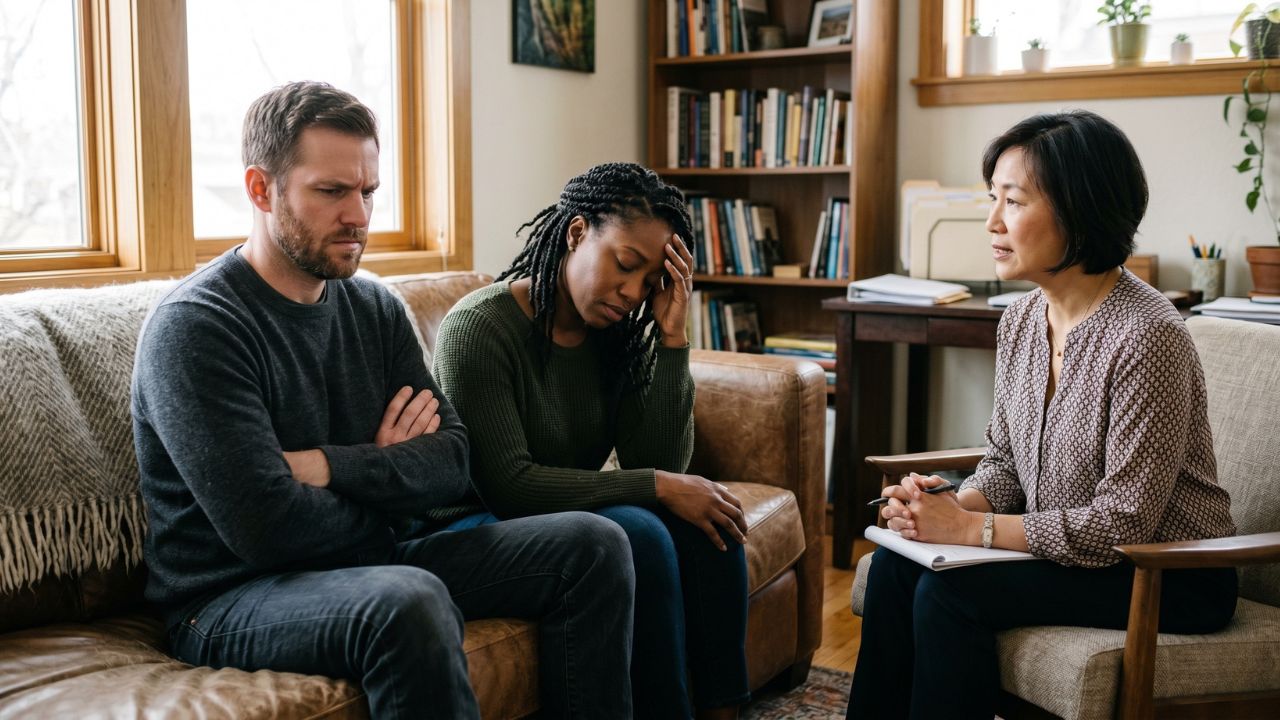
Relationship ruptures are moments of disconnection, conflict, withdrawal, or emotional misattunement that can strain trust and safety between partners, family members, or close loved ones. In trauma-informed therapy, we often view these moments not simply as “problems,” but as meaningful signals about unmet needs, attachment patterns, communication breakdowns, or unresolved emotional wounds. For individuals and couples in Greeley and across Northern Colorado, understanding what a rupture actually means can be the first step toward meaningful repair.
Key Takeaways
- Relationship ruptures are disruptions in emotional connection, trust, communication, or felt safety between people.
- Not every rupture signals an unhealthy relationship, but repeated unresolved ruptures can deepen distress.
- Trauma history, attachment patterns, nervous system activation, and communication habits often shape how ruptures unfold.
- Effective repair usually involves emotional regulation, accountability, clearer communication, and relational safety.
- Specialized trauma-informed relationship support is available in Greeley and across Northern Colorado for those navigating repeated relational distress.
What Is a Relationship Rupture?
A relationship rupture is a breakdown in connection between two people. This can be obvious, such as an argument, betrayal, or hurtful comment. It can also be subtle, like emotional withdrawal, repeated defensiveness, avoidance, silent resentment, or feeling unseen during difficult conversations.
In clinical settings, we often think of ruptures as moments when emotional connection becomes disrupted. The rupture itself is not always the greatest concern. What matters more is whether repair becomes possible.
Healthy relationships are not defined by the complete absence of conflict. Human relationships naturally involve differences, misunderstandings, stress responses, and moments of imperfect communication.
What often distinguishes resilient relationships from chronically distressed ones is the ability to recognize disconnection and work toward repair.
Why Relationship Ruptures Feel So Intense
Relationship ruptures often activate far more than the present moment.
For some individuals, a disagreement with a partner may feel disproportionately overwhelming. A delayed text response may trigger panic. A dismissive tone may create emotional shutdown. A minor misunderstanding may feel like abandonment.
This does not necessarily mean someone is overreacting.
Attachment experiences, trauma history, prior betrayals, family-of-origin dynamics, and nervous system sensitivity can all influence how relational stress is experienced.
People with insecure attachment patterns may experience rupture differently:
- Anxious attachment may lead to heightened fear of rejection, reassurance-seeking, or emotional escalation.
- Avoidant attachment may lead to withdrawal, emotional distancing, suppression, or discomfort with vulnerability.
- Disorganized attachment may involve alternating between closeness-seeking and protective distancing.
These are broad patterns, not diagnoses.
In our work with individuals and couples in Greeley and across Northern Colorado, we often see people interpreting present-day relationship conflict through the lens of earlier relational experiences, especially when trust or emotional safety has historically felt inconsistent.
Common Causes of Relationship Ruptures
Relationship ruptures can emerge from many sources.
Communication Breakdowns
Miscommunication remains one of the most common contributors.
Examples include:
- criticism
- defensiveness
- invalidation
- poor listening
- assumption-making
- escalation without clarification
Sometimes the issue is not the topic itself, but how the conversation unfolds.
Unresolved Trauma
Trauma can shape emotional regulation, perception of threat, trust formation, and conflict responses.
Someone with trauma history may experience certain relational behaviors as especially activating, even when the current partner’s intent differs from past harmful experiences.
Trauma-informed therapy does not assume all conflict is trauma-driven, but trauma can be an important factor.
Attachment Injuries
Attachment injuries are emotionally significant relational wounds.
Examples may include:
- feeling abandoned during vulnerability
- repeated emotional unavailability
- betrayal
- broken trust
- dismissive responses during distress
Without repair, these injuries can accumulate.
Chronic Stress
External pressures often intensify rupture frequency.
Stressors may include:
- parenting demands
- caregiving
- financial strain
- work burnout
- health challenges
- life transitions
Northern Colorado families balancing careers, childcare, commuting between communities like Greeley, Loveland, and Fort Collins, or managing evolving household demands may find that chronic stress narrows emotional capacity for patience and repair.
Not Every Relationship Rupture Means the Relationship Is Failing
Conflict alone is not a reliable indicator of relationship failure.
Even strong relationships experience:
- misunderstandings
- hurt feelings
- emotional mismatches
- unmet expectations
- imperfect repair attempts
A rupture becomes more concerning when patterns become rigid, repetitive, emotionally unsafe, or resistant to change.
Potential warning signs include:
- repeated contempt
- emotional intimidation
- persistent stonewalling
- coercive dynamics
- unresolved betrayal patterns
- fear-based communication
- inability to acknowledge impact
Context matters.
A single difficult conversation is different from entrenched harmful relational patterns.
What Healthy Relationship Repair Actually Looks Like
Repair is the process of restoring emotional connection after disruption.
This does not mean pretending conflict never happened.
Healthy repair often includes:
Emotional Regulation First
Repair conversations rarely go well when both nervous systems remain highly activated.
Sometimes the most effective first step is temporary de-escalation.
That may look like:
- pausing the conversation
- grounding exercises
- physical movement
- returning when both people can engage more clearly
Space should be structured and intentional, not abandonment.
Taking Accountability
Repair often requires acknowledging impact, even when intent was different.
Examples:
- “I can see that what I said felt dismissive.”
- “I became defensive instead of listening.”
- “I shut down rather than staying present.”
Accountability is not the same as accepting blame for everything.
It means recognizing one’s role honestly.
Clarifying Meaning
People often react not just to behavior, but to what they believe the behavior means.
A missed call may mean:
- “You do not care.”
- “I am not important.”
- “I cannot rely on you.”
Repair often improves when assumptions become explicit.
Rebuilding Safety
Trust repair takes consistency.
Words matter, but repeated behavior matters more.
Rebuilding emotional safety may involve:
- clearer boundaries
- predictable communication
- improved emotional responsiveness
- transparency
- relational follow-through
When Trauma Changes How Repair Works
Trauma can complicate repair.
Some individuals intellectually understand that a partner is trying to reconnect, while their nervous system still responds as if danger is present.
This is not uncommon.
Trauma-informed relationship work often includes:
- emotional regulation skills
- attachment exploration
- trigger identification
- somatic awareness
- communication restructuring
- nervous system-informed coping tools
Approaches such as EMDR, attachment-based therapy, and trauma-informed relational counseling may be relevant depending on the person and presenting concerns.
Treatment fit varies by individual circumstances.
Finding Trauma-Informed Relationship Therapy in Greeley
When ruptures become repetitive, emotionally exhausting, or difficult to resolve independently, professional support may help.
A trauma-informed relationship therapist may help clients:
- identify recurring patterns
- understand attachment dynamics
- improve conflict communication
- strengthen emotional regulation
- process unresolved relational wounds
- rebuild trust where appropriate
At The Colorado Center for Trauma and Attachment in Greeley, our clinical approach recognizes that relationship distress often involves more than communication tips alone.
Sometimes what looks like “poor communication” is actually a nervous system protection strategy, attachment injury, or unresolved trauma response.
For those considering care, you can see what our patients are saying.
Telehealth may also be appropriate for some Colorado residents depending on clinical needs and licensure considerations.
When Relationship Ruptures May Signal a More Serious Concern
Some ruptures reflect ordinary relational strain.
Others may point toward more significant concerns.
Examples may include:
- persistent emotional abuse
- coercive control
- intimidation
- repeated betrayal without accountability
- chronic emotional neglect
- escalating fear during conflict
Educational content cannot determine whether a specific relationship is healthy or unsafe.
If someone feels consistently afraid, controlled, or emotionally destabilized, individualized professional support may be warranted.
Practical First Steps After a Relationship Rupture
If you are navigating a rupture, consider:
Pause Before Escalation
Immediate reaction is not always the most effective response.
Brief emotional regulation can reduce harmful communication.
Name the Rupture Clearly
Try direct language:
“I think something shifted between us.”
Naming disconnection can reduce confusion.
Focus on Specific Behaviors
Broad accusations often intensify defensiveness.
Instead of:
“You never care.”
Try:
“I felt hurt when the conversation ended abruptly.”
Stay Curious
Curiosity creates space for understanding.
Questions may help:
- “What happened for you in that moment?”
- “What did you hear me saying?”
- “What felt difficult there?”
Notice Repetition
Recurring patterns often provide important information.
If the same rupture happens repeatedly, deeper underlying dynamics may need attention.
FAQs
What is the difference between normal conflict and a relationship rupture?
Normal conflict refers to disagreement or differing perspectives. A relationship rupture involves disruption in emotional connection, trust, safety, or felt attunement. The overlap can be significant, but ruptures usually involve relational disconnection beyond simple disagreement.
Can relationship ruptures be repaired?
Many can, depending on the circumstances, relational patterns, willingness to engage in repair, and presence or absence of harmful dynamics. Not all relationships can or should be repaired in the same way.
Why do small conflicts feel disproportionately upsetting?
Sometimes current conflict activates earlier attachment wounds, trauma responses, betrayal experiences, or nervous system sensitivity. This does not mean the reaction is intentional or irrational, but it may signal deeper patterns worth exploring.
Where can I find trauma-informed relationship therapy in Greeley?
Individuals and couples seeking trauma-informed relationship counseling in Greeley may benefit from working with clinicians experienced in attachment, trauma, emotional regulation, and relational repair. The Colorado Center for Trauma and Attachment serves Greeley and the broader Northern Colorado region.
Does The Colorado Center for Trauma and Attachment offer telehealth in Northern Colorado?
Telehealth may be available for clients across Colorado when clinically appropriate and consistent with provider licensure. Availability can vary based on individual treatment needs.
At The Colorado Center for Trauma and Attachment, healing is approached with intention, clinical integrity, and deep respect for each person’s lived experience. Founded by Andrea Shindle, MA, LPC, NCC, the practice supports individuals, couples, families, and children across Colorado who are navigating trauma, grief, attachment wounds, and complex relational challenges. Andrea and her team provide trauma-informed, evidence-based care using approaches such as EMDR, attachment-based therapy, and developmentally focused modalities, with an emphasis on safety, pacing, and long-term healing rather than quick fixes. The practice has served clients since early 2024, and Andrea brings over a decade of clinical experience as a counselor in Colorado, including eight years as a Licensed Professional Counselor and two years as a Licensed Professional Counselor Candidate while completing 2,000 hours of supervised practice. Her background also includes national board certification, specialized trauma and attachment training, and experience providing clinical supervision to other therapists. To learn more about working with Andrea or her team, you can visit the Colorado Center for Trauma & Attachment.