
The Difference Between General Counseling and Specialized Trauma Therapy

Written by Andrea Shindle, MA, LPC, NCC | Last Updated: January 2026
The difference between general counseling and specialized trauma therapy lies in training, focus, and treatment approach. General counseling supports everyday emotional and relational concerns, while trauma therapy is designed to address how overwhelming experiences affect the nervous system, memory, and sense of safety using structured, evidence-based methods.
Key Takeaways
- General counseling and trauma therapy serve different clinical purposes.
- Trauma therapy requires specialized training and supervision beyond general licensure.
- Trauma-informed care prioritizes safety, pacing, and nervous system regulation.
- Choosing the right approach depends on symptoms, history, and treatment goals.
- Professional assessment is essential for determining appropriate care.
What is general counseling, and what concerns does it typically address?
General counseling is a broad form of mental health support that helps individuals navigate emotional, relational, and situational challenges. It is commonly used for concerns that are distressing but not rooted in unresolved trauma or nervous system dysregulation.
Counselors providing general therapy often support clients who are experiencing:
- Stress related to work, school, or life transitions
- Mild to moderate anxiety or depression
- Relationship or communication challenges
- Grief, adjustment, or self-esteem concerns
This type of counseling typically focuses on insight, coping strategies, emotional processing, and problem-solving. Sessions may explore current thoughts, feelings, and behaviors, as well as patterns that influence decision-making and relationships.
General counseling can be highly effective for many people. However, when symptoms are driven by traumatic experiences, a different level of clinical specialization may be required.
How does specialized trauma therapy differ in training and approach?
Specialized trauma therapy is built on a deeper understanding of how trauma affects the brain, body, and nervous system. Trauma therapists complete additional education, certification, and clinical supervision focused specifically on trauma-related conditions.
Rather than relying primarily on talk-based processing, trauma therapy often incorporates structured modalities designed to address:
- Dysregulation of the nervous system
- Trauma stored in implicit memory
- Survival responses such as fight, flight, freeze, or collapse
- Attachment disruptions formed early in life
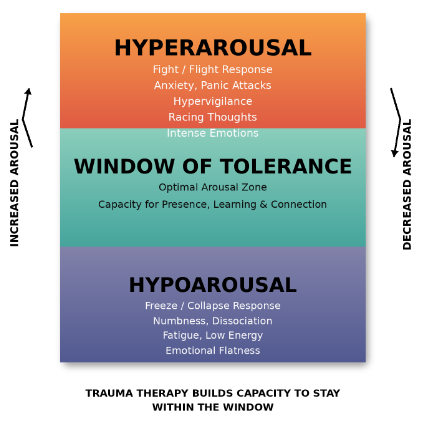
One commonly used framework in trauma-informed care is the window of tolerance, which describes how the nervous system responds to stress and safety.
Therapists trained in trauma-specific approaches learn how to pace treatment carefully and avoid re-traumatization. Sessions may include grounding techniques, body-based awareness, and gradual processing rather than direct emotional exposure.
This distinction is central to understanding the difference between general counseling and specialized trauma therapy, particularly for individuals whose symptoms persist despite traditional therapy.
When is trauma therapy clinically recommended instead of general counseling?
Trauma therapy is often recommended when symptoms are linked to overwhelming or repeated experiences that the nervous system was unable to process at the time they occurred. Research on how trauma affects the brain and body helps explain why symptoms such as hypervigilance, dissociation, or emotional numbing may persist even when current stressors are reduced. These experiences may include, but are not limited to, childhood neglect, abuse, medical trauma, complex grief, or relational trauma.
The comparison below highlights practical differences in focus, training, and treatment goals between general counseling and trauma-specific therapy.
Feature | General Counseling | Specialized Trauma Therapy |
|---|---|---|
Primary Focus | Present-day stressors & life transitions | Nervous system regulation & trauma memory |
Approach | Insight-based & talk-centric | Modality-based (EMDR, Somatic, etc.) |
Goal | Coping strategies & problem solving | Restoring internal safety & processing roots |
Training | Standard Master’s/Licensure | Advanced trauma-specific training and supervision |
Signs that trauma-focused care may be appropriate include:
- Persistent anxiety or hypervigilance
- Emotional numbness or dissociation
- Difficulty feeling safe in relationships
- Intrusive memories or body-based reactions
- Strong emotional responses that feel disproportionate to present events
In these cases, general counseling alone may not fully address the underlying mechanisms driving distress. Trauma therapy aims to help the nervous system regain flexibility and restore a sense of internal safety over time.
A qualified mental health professional can assess whether trauma-informed or trauma-specific treatment is appropriate for an individual’s needs.
What role does attachment play in trauma-focused treatment?
Attachment refers to the early relational patterns formed with caregivers and how those patterns shape emotional regulation and connection throughout life. Trauma therapy frequently integrates attachment-based frameworks to address relational wounds that general counseling may not explicitly target.
Attachment-focused trauma therapy may explore:
- How early relationships influenced emotional safety
- Patterns of avoidance, anxiety, or disconnection in adulthood
- The impact of developmental trauma on self-worth and trust
By addressing both trauma and attachment, specialized therapy provides a more comprehensive approach for individuals whose difficulties are rooted in early or relational experiences.
This integrated focus further distinguishes the difference between general counseling and specialized trauma therapy in both scope and depth.
Choosing the right level of care
Selecting the appropriate therapeutic approach is not about one option being better than the other. It is about clinical fit. Some individuals benefit greatly from general counseling, while others require the structure and specialization of trauma therapy.
Important considerations include:
- The nature and duration of symptoms
- Personal history, including early experiences
- Previous responses to therapy
- Current functioning and support systems
Because mental health treatment is highly individualized, therapy should never be approached as a one-size-fits-all solution.
Clinical expertise and experience matter
The Colorado Center for Trauma and Attachment has been serving clients since early 2024, with care led by founder Andrea Shindle, MA, LPC, NCC. Andrea has been a Licensed Professional Counselor in Colorado for eight years and has over a decade of clinical experience supporting trauma-impacted individuals, couples, and families, including her time as a Licensed Professional Counselor Candidate.
Her background includes national certification through the National Board of Certified Counselors and specialized training in trauma-informed and attachment-based modalities. In addition to client care, she provides clinical supervision to other therapists, reinforcing a culture of ethical, evidence-based practice.
If you would like insight into patient experiences, you can see what our patients are saying.
Frequently asked questions
Understanding your options moving forward
Understanding the difference between general counseling and specialized trauma therapy can help individuals make informed decisions about mental health care. Both approaches have value, and the right choice depends on clinical needs rather than labels or assumptions.
Working with a licensed professional who understands both pathways allows treatment to be tailored with care, accuracy, and respect for personal experience. If you are ready, please fill out our form. We offer a free 15-minute consultation for new patient inquiries.
If you or someone you know is experiencing thoughts of self-harm or is in immediate emotional distress, support is available. You can call or text the 988 Suicide & Crisis Lifeline for confidential support, 24 hours a day, anywhere in the United States. If you are in immediate danger, call 911.