
What Are the Physical and Emotional Symptoms of Unresolved Trauma?

Written by Andrea Shindle, MA, LPC, NCC | Last updated: January 2026
Unresolved trauma can affect both the body and the mind long after a distressing experience has passed. It often shows up through ongoing emotional distress, changes in behavior, and physical symptoms such as chronic tension or fatigue. These responses reflect how the nervous system adapts when experiences have not yet been fully processed.
Key Takeaways
- Unresolved trauma can influence physical health, emotional regulation, and relationships.
- Symptoms vary widely and may appear weeks, months, or even years after an event.
- Physical and emotional symptoms are often connected through the nervous system.
- Trauma responses are adaptive, not signs of weakness or personal failure.
- Professional, trauma-informed support can help individuals address these patterns safely.
Andrea Shindle, MA, LPC, NCC, brings over a decade of clinical experience providing trauma-informed counseling services in Colorado, supporting individuals, couples, families, and children impacted by trauma, attachment wounds, and complex relational concerns.
How does unresolved trauma affect the body?
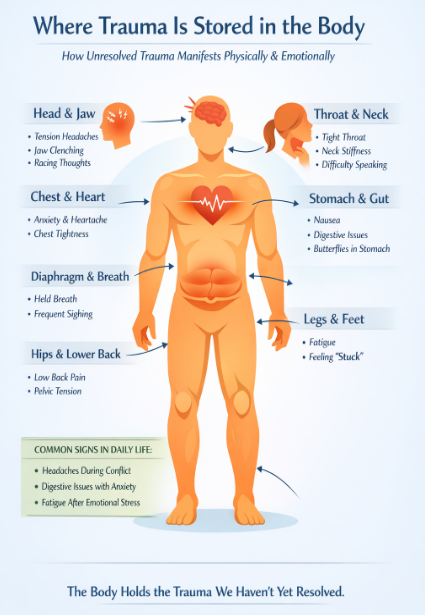
Trauma is not experienced only as a memory. Instead, it is also stored in the body through the nervous system. When an overwhelming event occurs, the body may shift into a prolonged state of alert or shutdown. If that response does not fully resolve, physical symptoms can gradually develop.
Common physical symptoms associated with unresolved trauma may include:
- Chronic muscle tension, particularly in the neck, shoulders, or jaw
- Headaches or migraines without a clear medical cause
- Gastrointestinal discomfort, nausea, or changes in appetite
- Persistent fatigue or low energy
- Sleep disturbances, including insomnia or frequent waking
- Heightened startle response or feeling constantly on edge
Importantly, these symptoms do not mean that something is “wrong” with a person’s body. Rather, they reflect how the nervous system learned to protect itself during an overwhelming experience.
The role of the nervous system
When trauma occurs, the nervous system may remain in a heightened or protective state, shaping physical sensations, emotional responses, and stress patterns over time, which aligns with broader research on how trauma affects the nervous system. Over time, this can affect immune function, digestion, and pain perception. As a result, many people seek medical care for these symptoms without realizing that unresolved trauma may be contributing.
What emotional symptoms are linked to unresolved trauma?
Alongside physical responses, unresolved trauma often affects emotional well-being. Although emotional symptoms may be more recognizable, they can still feel confusing or difficult to name.
Emotional symptoms may include:
- Ongoing anxiety or a sense of impending danger
- Depression, emotional numbness, or detachment
- Irritability or sudden mood changes
- Difficulty trusting others
- Feelings of shame, guilt, or self-blame
- Persistent grief or sadness that feels unresolved
These reactions are not character flaws. Instead, they are learned survival responses that once served a protective purpose. Over time, however, they may interfere with daily functioning or relationships. Living in high-stress or fast-growing areas like Greeley/Evans; or elsewhere in Northern Colorado, can sometimes “trigger” those dormant symptoms.
Emotional regulation challenges
In many cases, unresolved trauma affects emotional regulation. Small stressors may feel overwhelming, while significant events may trigger emotional shutdown. Consequently, individuals often question their own reactions, even when those reactions are rooted in past experiences.
Can unresolved trauma impact behavior and relationships?
Yes. Trauma rarely exists in isolation. Over time, it can influence patterns of behavior and connection with others. Many individuals notice recurring relationship challenges without understanding their origin.
Behavioral and relational signs can include:
- Avoidance of certain places, people, or situations
- Difficulty with boundaries or asserting needs
- People-pleasing or chronic conflict avoidance
- Emotional withdrawal or fear of closeness
- Repetitive relationship patterns that feel familiar but painful
Often, attachment wounds formed through trauma affect how safe a person feels in relationships. These patterns tend to operate automatically and outside of conscious awareness.
Why do symptoms sometimes appear years later?
A common question is why symptoms emerge long after a traumatic event. In many situations, trauma responses remain dormant until the nervous system is activated by stress, life transitions, or relational changes.
Delayed symptoms may surface during:
- Major life transitions such as marriage, divorce, or parenthood
- Experiences of loss or grief
- Medical procedures or accidents
- Periods of prolonged stress or burnout
Even then, the nervous system responds based on past experiences, not present danger. Therefore, delayed symptoms do not invalidate the experience. Instead, they reflect how trauma is stored and processed over time.
What are the physical and emotional symptoms of unresolved trauma in daily life?
In everyday life, the physical and emotional symptoms of unresolved trauma often overlap. For example, emotional stress may trigger physical pain, or physical illness may lead to emotional shutdown. These connections are not coincidental.
This connection between physical sensations and emotional stress is well documented in research on trauma and physiological responses, particularly in studies examining how the body continues to respond even after the original threat has passed.
Common examples include:
- Tension headaches during conflict
- Digestive discomfort linked to anxiety
- Fatigue following emotionally charged interactions
For some people, these patterns may feel familiar in daily life. A brief self-reflection can sometimes help clarify whether trauma-related stress may be worth exploring further.
Does this sound familiar?
- Do you often feel “on edge,” even in situations that are generally safe?
- Do you experience physical discomfort or tension that does not have a clear cause?
- Do you notice yourself shutting down or withdrawing during conflict or stress?
Next step: If you are curious about these patterns, you may consider reaching out to schedule a free 15-minute consultation.
How is unresolved trauma different from everyday stress?
While stress is a normal part of life, it typically resolves once the stressor passes. Trauma, however, involves experiences that overwhelm the nervous system’s ability to cope at the time they occur.
Key differences include:
- Trauma responses persist beyond the original event
- Symptoms feel automatic rather than chosen
- The body reacts as if the threat is still present
For this reason, stress management strategies may help, but unresolved trauma often requires a more specialized, trauma-informed approach.
What types of trauma can lead to unresolved symptoms?
Trauma is subjective. What feels overwhelming to one person may not to another. As a result, unresolved trauma can stem from a wide range of experiences, including:
- Childhood emotional neglect or abuse
- Medical trauma or invasive procedures
- Accidents or natural disasters
- Relationship betrayal or chronic conflict
- Loss of a loved one
It is not necessary to compare experiences or decide whether something was “bad enough.” If symptoms persist, the impact is worth addressing.
How can trauma-informed therapy help?
Trauma-informed therapy emphasizes safety, choice, and collaboration. It also recognizes the role of the nervous system and respects each person’s pacing.
Approaches such as EMDR, attachment-based therapy, and somatic interventions may help individuals:
- Process traumatic memories safely
- Reduce physical and emotional reactivity
- Improve nervous system regulation
- Strengthen internal and relational safety
Importantly, therapy is not about reliving trauma. Instead, it focuses on helping the nervous system recognize that the present is safer than the past.
What are the physical and emotional symptoms of unresolved trauma? and when to seek support
Many people wonder when symptoms warrant professional support. While there is no single threshold, seeking help may be beneficial if symptoms:
- Interfere with work, relationships, or daily life
- Feel confusing or difficult to manage alone
- Persist despite self-care or stress reduction efforts
If helpful, you can also see what our patients are saying.
Frequently asked questions
What are the physical and emotional symptoms of unresolved trauma? and moving forward
Understanding what are the physical and emotional symptoms of unresolved trauma can help normalize experiences that often feel isolating. Ultimately, these symptoms are meaningful signals from the nervous system, not signs of failure. With appropriate support, many people develop greater awareness, regulation, and resilience over time. If you are ready, please fill out our form. We offer a free 15-minute consultation for new patient inquiries.
If you or someone you know is experiencing thoughts of self-harm or is in immediate emotional distress, support is available. You can call or text the 988 Suicide & Crisis Lifeline for confidential support, 24 hours a day, anywhere in the United States. If you are in immediate danger, call 911.